 Skip to content
The review brought together 33 studies involving 2,101 participants. Each study recorded a brain measure during exposure to a real, virtual, or imagined natural environment. Researchers also used a standard mood questionnaire, most often the State-Trait Anxiety Inventory or the Profile of Mood States. This design let them see whether subjective reports tracked physiological change.
The clearest finding is a small-to-moderate, measurable shift
The research team at the University of Houston found a consistent overall pattern. Nature exposure was associated with improved questionnaire scores. It was also associated with measurable shifts in brain activity.
The pooled numbers came from nine studies with controlled comparisons. Questionnaire scores showed a small-to-moderate, statistically reliable improvement, with a Hedges’ g of 0.30. Brain measures showed a somewhat larger shift, with a Hedges’ g of 0.43. Those figures suggest a real signal across the controlled studies, while the variation between studies calls for a measured interpretation.
The emotional pattern depended on who was taking part. In clinical populations, the clearest change was a reduction in negative emotions. In healthy volunteers, the picture was more balanced: roughly equal proportions of studies reported brighter moods and an easing of negative feelings. The paper describes this as a “more balanced psychological response,” with neither direction clearly dominant.
Real natural settings accounted for 61 percent of the studies. Visual imagery, including virtual reality and imagination-based tasks, accounted for 39 percent. Real-world immersion appeared to produce the strongest effects, while screen-based nature or imagined nature still showed benefits. The review points toward direct contact as the strongest form of exposure while leaving room for other formats when they fit someone’s circumstances.
The brain may register a change before words do
Electroencephalography or EEG, appeared in 82 percent of the studies. Other studies used functional magnetic resonance imaging or functional near-infrared spectroscopy. Together, these methods gave researchers several ways to observe how brain activity shifted during exposure to nature.
One functional magnetic resonance imaging study found increased functional connectivity between the default mode network and attention-related brain networks during nature exposure, a pattern the authors interpret as potentially consistent with attention restoration, though that same study found no significant change in the participants’ mood questionnaire scores. Functional near-infrared spectroscopy studies showed reduced activity in the prefrontal cortex, a pattern linked with relaxation.
Brain activity sometimes shifted even when participants reported feeling about the same. That pattern suggests questionnaires may miss part of the response, which helps explain why the pooled brain effect was somewhat larger. The neurophysiological results also showed substantially more variation across studies than the questionnaire results, an important caveat when interpreting what the brain measures mean.
The authors interpret these results through two established theories. Stress Reduction Theory proposes that nature scenes engage the parasympathetic nervous system, the branch involved in rest and physiological recovery. Attention Restoration Theory proposes that natural settings give directed attention a chance to rest. The paper also places these short-term responses inside the “neural exposome,” the idea that environmental exposures shape brain health across a lifetime. Within that framework, stress impacts brain health through sensitization of the hypothalamic-pituitary-adrenal axis. These mechanisms remain proposed explanations for the observed associations.
A nearby place can support a daily practice
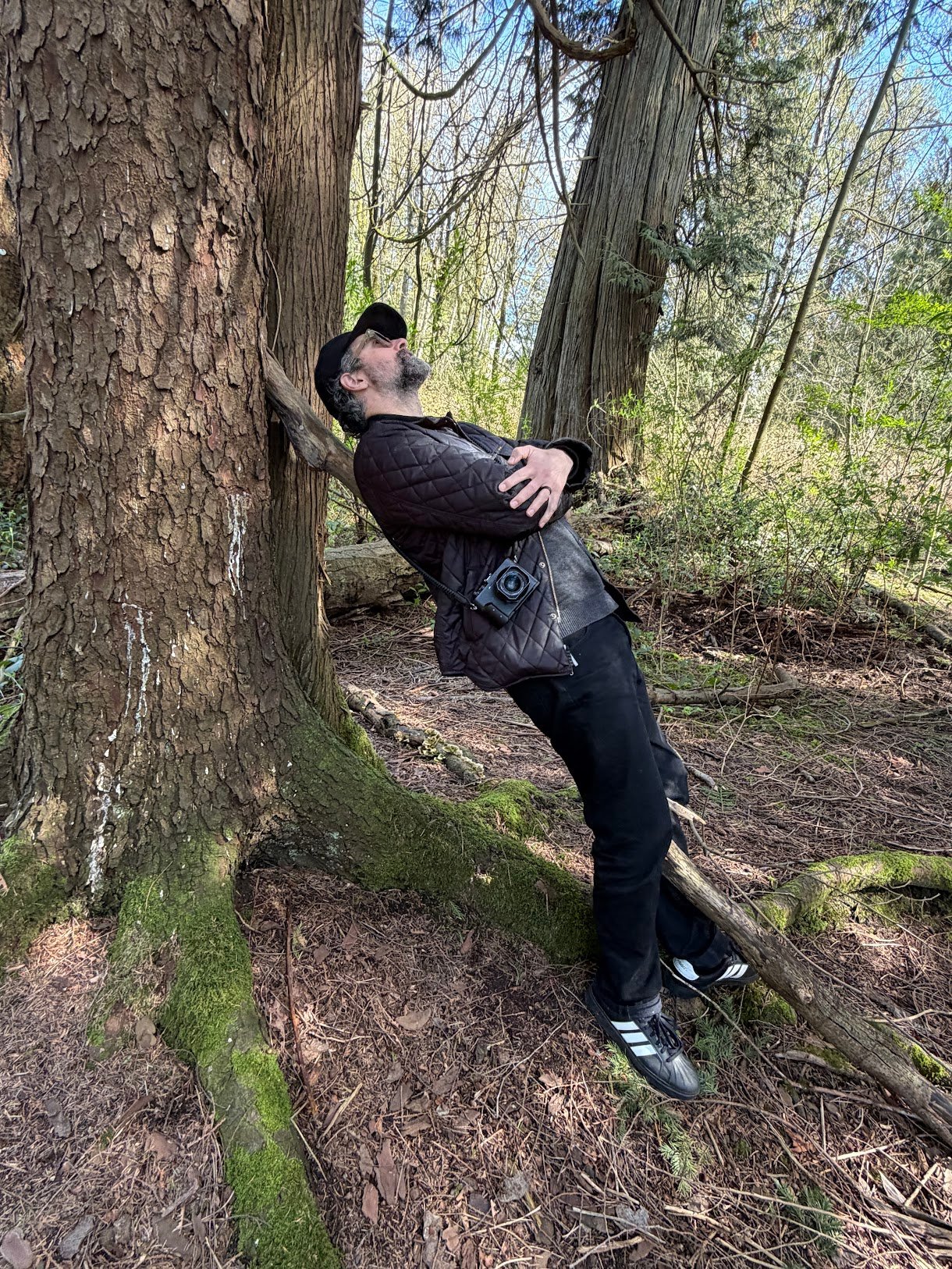
Choose a nearby place with natural features, then sit there regularly at an unhurried pace. Let your attention settle on what is actually present: the movement of leaves, the texture of bark, the changing light, or the sound of birds. A neighbourhood tree, a garden, or a small park can hold this practice.
The review offers stronger support for real-world immersion than for screen-based exposure. It also suggests that imagined nature or visual imagery can carry some benefit. For daily life, the useful emphasis is regular contact in a place you can return to. Brief repeated visits can become more workable than waiting for a special outing.
The evidence is promising, with important limits
The authors rated 88 percent of the studies as having methodological weaknesses. The pooled effect sizes rest on nine controlled studies, while the effects varied considerably across that group, moderately for questionnaire outcomes and substantially for brain measures. Seventy percent of the studies took place in Asia, so transfer to Western populations remains a question for future research.
Most participants were healthy adults. Seven studies included clinical populations. Children made up 1.4 percent of all participants. These gaps narrow the populations to which the findings can be applied with confidence.
The brain results showed substantially more variation than the questionnaire results. More work needed before researchers can specify which brain changes matter most or how long they last.
Let the practice stay modest
Regular time in a nearby natural setting may be associated with a small-to-moderate shift toward emotional ease. Brain measures suggest that part of the response may happen beneath conscious awareness. The evidence is promising enough to make a daily sit worth trying, with the practice held lightly as one supportive part of life.
Full citation
Daube, A., Lima-Carmona, Y. E., Hernández Solís, D. G., & Contreras-Vidal, J. L. (2026). A Systematic Review and Meta-Analysis of EEG, fMRI, and fNIRS Studies on the Psychological Impact of Nature on Well-Being. International Journal of Environmental Research and Public Health, 23(3), 377. DOI: 10.3390/ijerph23030377.

Leave a Reply