

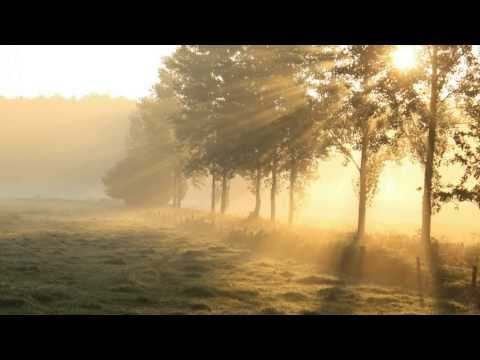
When most of us think of Ludwig van Beethoven, we picture the scowling portraits, the wild hair, the man battling his own deteriorating hearing. What we rarely imagine is him circling a Viennese park in a downpour, humming silently to himself, composing in his head. But this image captures something essential about Beethoven: a composer who found in nature what the world had taken from him.
He emerged from hours among the trees with the resonance he needed.
Beethoven was not a casual park-stroller. Walking in forests and countryside was as fundamental to his creative process as paper and ink. Whether in the hills surrounding Vienna—Kahlenberg, Leopoldsberg, the rural Helenental valley—or returning to his native Bonn, these walks were not breaks from his work. They WERE the work. He emerged from hours among the trees with fragments of melody, emotional clarity, and what he called “the resonance he needed.”
He was practicing what we now call nature therapy
There’s something quietly radical about this habit. In the early 1800s, during the Industrial Revolution, Vienna was growing noisier, dirtier, and more polluted. Beethoven could have responded as many did: retreated entirely into the city’s concert halls and drawing rooms. Instead, he did the opposite. He walked toward the woods. He listened to bird calls. He sat by brooks. He was, without knowing it, practicing what we now call nature therapy; finding in forests what no doctor or hearing aid could provide.
More the expression of feeling than painting.
His Sixth Symphony, the “Pastoral,” is the physical manifestation of these walks. Completed in 1808, it’s the story of a day in the countryside told through five movements. “Awakening of cheerful feelings upon arrival in the countryside.” A murmuring brook. A thunderstorm with lightning and rain. The symphony doesn’t depict nature in a literal, photographic way. Instead, it captures the emotional truth of being immersed in the peace of a forest, the specific awe of a storm. He described the Pastoral Symphony as “more the expression of feeling than painting.”
Beethoven used bird calls as musical material. The flute carries the nightingale’s voice. The oboe becomes a quail. Clarinets transform into cuckoos. Even his Fifth Symphony, with its famous “da-da-da-dah” opening, may owe something to the call of an ortolan bunting he heard during his walks. Nature wasn’t scenery for Beethoven. It was vocabulary.
For surely woods, trees, and rocks produce the echo that man desires to hear.
In one letter, he wrote: “How delighted I will be to ramble for a while through the bushes, woods, under trees, through grass, and around rocks. No one can love the country as much as I do. For surely woods, trees, and rocks produce the echo that man desires to hear.”
That phrase—”the echo that man desires to hear”—is worth sitting with. Beethoven was deaf. The natural world, paradoxically, was where he found the deepest acoustic and emotional resonance. Trees and rocks and brooks gave back what silence had taken.
Sitting in nature is a way of tuning ourselves to frequencies we otherwise miss.
For those of us in the Sit Spot Club, this resonates. We’re doing something Beethoven understood intuitively: that sitting in nature isn’t a luxury or an escape. It’s a way of tuning ourselves to frequencies we otherwise miss. A way of hearing the echo we’re looking for.
Want to experience what Beethoven did? Next time you’re in a forest or by water, listen like a composer. What birds do you hear? What feelings arrive when the rain begins? Your own resonance might be waiting there.

